
How to Sell Sanatorium Packages with a Predictable Commercial System
Sanatorium sales are rarely “fixed” by one marketing campaign. In European markets, demand is shaped by seasonality, short-break habits, growing wellness awareness, medical credibility, and rising customer expectations for online convenience. A sanatorium that relies only on location and word of mouth will usually see unstable occupancy, discount pressure, and uneven utilisation of medical capacity.
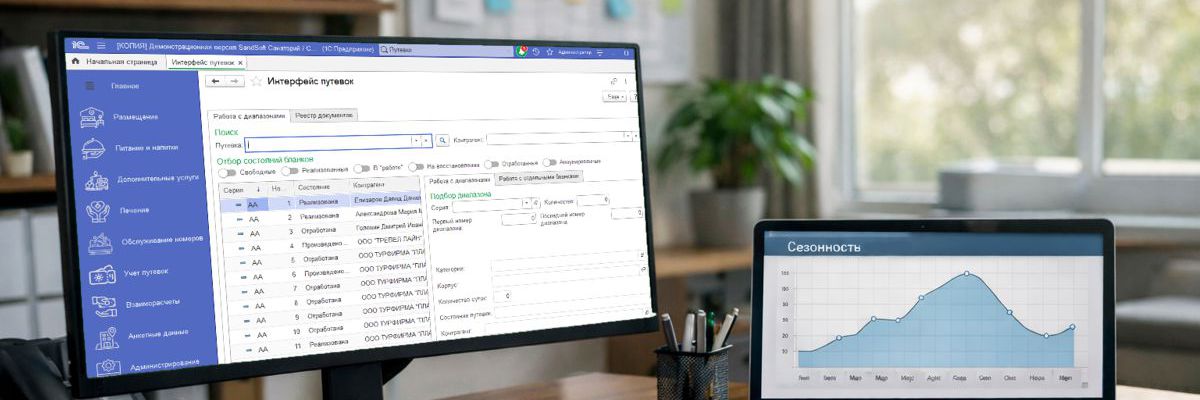
A predictable result comes from a managed system: a clear product line, disciplined pricing, a controlled sales funnel, and operational delivery that matches the promise of the package. From the start, it is worth treating package administration as a management process, not a set of spreadsheets. This is why many operators move to SandSoft Sanatorium software early: it supports package tracking, availability control, consistent statuses from inquiry to arrival, and management visibility across sales and operations.
Why a Sanatorium Package Is a Product, Not a Room Night
A package is sold as an outcome. Guests do not buy “accommodation + meals”; they buy prevention, recovery, stress reduction, improved mobility, or a structured health reset with professional supervision. The commercial strategy should therefore position packages as understandable programmes with a goal, structure, and clear inclusions.
In Europe, this is especially relevant because guests compare options across countries and regions. A wellness guest looking at the Alps, the Baltic coast, thermal regions in Central Europe, or Mediterranean health resorts typically decides based on clarity and trust: what is included, what results are realistic, how the daily schedule works, and how the medical part is organised.
Package Design That Sells and Can Be Delivered
Strong package design solves two tasks at once: it makes the offer easy to buy and easy to deliver. If packages differ only by vague names, the sales team will spend time explaining basics, and guests will make decisions mostly on price. If packages are well-structured, the sanatorium wins on expertise and confidence.
Your package line should be differentiated by purpose, intensity, and duration. Short programmes address European short-break behaviour; longer programmes support classic courses and predictable utilisation of medical resources. The medical component must be presented in a business-friendly way: clear suitability, process description, and a transparent guest journey—without turning the website into a medical textbook.
Pricing and Revenue Discipline Without Constant Discounting
In many European destinations, competition increases during shoulder seasons, while peak season is constrained by accommodation capacity and medical schedules. The common mistake is to set prices with a simple “room rate + meals + a fixed treatment amount” logic, without verifying delivery cost and capacity impact. That approach usually leads to profitability issues or operational overload.
A professional approach connects pricing to capacity, package composition, and demand patterns. Pricing should be consistent across durations and categories, with clear rules for prepayment, cancellation, and rescheduling. When discounting is needed, it should be targeted and controlled to protect margin and brand positioning.
Instead of frequent discounts, sanatoriums often gain better results by improving package value perception: including a meaningful diagnostic element, clarifying the treatment schedule, adding premium service components, or offering flexible arrival days. These adjustments support conversion while maintaining a stable price level.
Sales Channels in Europe and How to Protect Margin
Not all channels are equal. Some are volume drivers with higher cost of sale; others deliver fewer leads but higher conversion and stronger repeat rates. The goal is a balanced channel mix with measured profitability, not maximum visibility at any cost.
Here is a practical channel structure that often works across European sanatorium and wellness operators:
- Direct sales: website, inbound calls, messaging, email, returning guests and referrals; best for margin and repeat business when the product is well explained
- Partner sales: corporate wellness programmes, travel partners, local healthcare and rehabilitation partners where applicable; best for stability and planned demand
- Commission-based platforms: useful for filling low-demand periods, but require strict control of pricing rules, package conditions, and profitability
Channel selection should be evaluated not only by lead volume, but by booking depth, average length of stay, prepayment rate, rescheduling frequency, and the share of ancillary services purchased on-site.
The Sales Funnel: From Inquiry to Arrival Without Lead Leakage
A sanatorium package is rarely an instant purchase. Guests compare programmes, ask about suitability, discuss dates, and evaluate budget. A funnel is essential because sales is a process, not a single conversation. Without a managed funnel, inquiries get lost in chats, response times become inconsistent, and conversion suffers even with strong demand.
A controlled funnel starts with response discipline, qualification rules, and a standard path: consultation, offer, reservation, payment, pre-arrival preparation. The pre-arrival stage matters commercially: it reduces cancellations, prevents misunderstandings, and increases guest readiness for a structured programme.
To make the funnel stable, separate consultation from administration. Consultation helps the guest choose the right programme and duration. Administration formalises terms, documents, payment, and package composition. When these steps are mixed, errors increase and the sanatorium pays for it through refunds, rescheduling, and lower satisfaction.
Content That Builds Trust Before Any Conversation
In Europe, many guests will decide whether to contact you based on the quality of information available online. If your website does not clearly explain package differences, inclusions, daily structure, and the guest journey, your sales team will be forced to do “basic education” instead of conversion work.
Trust content is not about hype. It is about clarity, transparency, and credibility: how the initial consultation works, what diagnostics are included, how treatment plans are built, how schedules are organised, and what your policies are. When this is communicated well, inquiry quality increases and price sensitivity decreases.
Service Delivery and Medical Capacity as a Commercial Asset
Sales promises must match delivery. The most damaging reviews are usually not about the quality of a procedure, but about organisational failures: waiting times, unclear schedules, last-minute substitutions, and overload of key specialists. These issues directly reduce repeat business and referral rates.
From a business perspective, medical capacity is a resource that must be planned. If you sell high-intensity programmes without managing real treatment availability, you will either disappoint guests or strain staff and quality. That inevitably creates discount pressure and reputation risk.
KPIs That Manage Package Sales, Not Just Report Revenue
Revenue alone does not explain performance. Management needs to see the drivers: conversion at each stage, channel efficiency, programme profitability, and capacity utilisation. This is how you decide whether to refine package design, adjust pricing rules, invest in specific channels, or improve service flow.
A practical KPI set for sanatorium package sales includes:
- Funnel conversion: inquiry to contact, contact to offer, offer to reservation, reservation to prepayment, prepayment to arrival
- Commercial efficiency: average package value, programme profitability, cost of sale by channel, commission share, ancillary revenue per guest
- Capacity control: occupancy by period, medical schedule utilisation, cancellation and rescheduling rate, booking window depth
These indicators are only reliable when they are based on consistent operational data, not manual records. This is where software-based package tracking becomes a management tool, not an IT detail.
Automation with SandSoft Sanatorium Software: What It Changes
A sanatorium operates at the intersection of hospitality and healthcare workflows. When inquiries, reservations, payments, package composition, and schedules are tracked in separate tools, management loses control and teams spend time reconciling data instead of serving guests and converting demand.
SandSoft Sanatorium software supports a unified flow from inquiry to package fulfilment. It helps formalise package statuses, control availability, reduce human error, and provide management visibility across sales and operations. As a result, response discipline improves, lead leakage decreases, pricing rules are applied consistently, and planning becomes more accurate.
Most importantly, automation helps the sanatorium scale: not only by increasing lead volume, but by improving conversion and protecting service quality during peak load.
Conclusion
If you want to master how to sell sanatorium packages, focus on a controlled business system: a clear package line, disciplined pricing, a balanced channel portfolio, a managed sales funnel, and service delivery that reliably matches the promise. This approach reduces discount dependence, improves conversion, and stabilises occupancy across seasons.
To make these improvements sustainable, operational transparency is essential. SandSoft Sanatorium software supports structured package accounting and end-to-end control, helping sanatoriums turn sales into a predictable, measurable process—aligned with European customer expectations for clarity, convenience, and trust.