
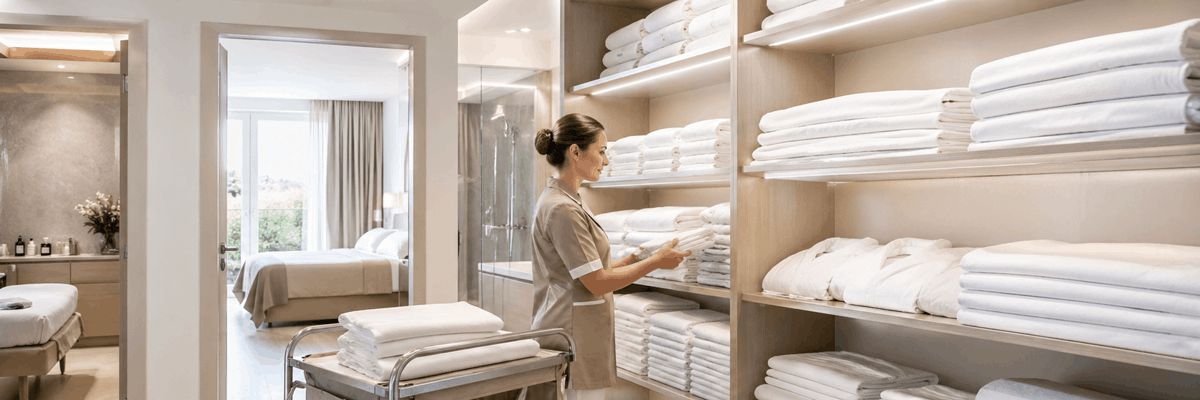
Linen Management in a Sanatorium: Organisation, Control and Automation
Linen management in a sanatorium is an important part of daily operational control. It affects room readiness, guest comfort, hygiene standards, treatment procedures, SPA services and the overall efficiency of the housekeeping department. In a sanatorium, linen is not limited to bed sheets and towels in guest rooms. It is also used in treatment rooms, rehabilitation areas, massage rooms, wellness zones, swimming pools, restaurants and staff service areas.
For this reason, linen management in a sanatorium requires a structured approach. The management team must know how much linen is available, where it is located, which department is responsible for it, what quantity is currently in laundry, what needs repair and what should be written off. Without reliable control, the sanatorium may face shortages, unnecessary purchases, service delays, undocumented losses and poor visibility of operating costs.
To improve control and reduce manual work, it is advisable to use Management of a sanatorium on platform 1C: Enterprise 8. The system helps organise linen movement, monitor stock balances, record transfers to and from laundry, control write-offs, support inventory checks and provide management reports for housekeeping supervisors and operational managers.
The Role of Linen Management in a Sanatorium
Linen management in a sanatorium supports several operational areas at the same time. Guest accommodation requires clean and complete linen sets for every room. Medical and treatment departments need textiles for procedures. SPA and wellness areas use towels, bathrobes and special-purpose textile items. Restaurants may require table linen, napkins and service textiles.
The key objective is to ensure that clean, suitable and properly stored linen is available at the right time and in the right department. This is especially important in European sanatoriums and wellness resorts where guests expect both comfort and clear hygiene discipline. A shortage of linen can delay room preparation, interrupt treatment schedules or create unnecessary pressure on housekeeping staff.
The complexity increases during seasonal peaks, weekends, health programme arrivals, group bookings and high SPA occupancy. In these periods, linen turnover becomes faster, and manual control often becomes unreliable. A sanatorium therefore needs not only sufficient linen stock, but also a transparent process for managing its full life cycle.
Linen Stock Structure in a Sanatorium
The linen stock of a sanatorium should be planned according to the size of the property, the number of rooms and beds, the treatment profile, the level of service and the operational model. A wellness resort with a large SPA area will have a different linen structure from a medical rehabilitation centre or a traditional thermal sanatorium.
The main linen categories usually include:
- bed linen for guest rooms, including sheets, duvet covers, pillowcases and mattress protectors;
- towels, bathrobes and wellness textiles for guests;
- medical and treatment linen for therapy rooms, massage rooms and rehabilitation areas;
- SPA, pool and wellness textiles;
- restaurant textiles, including tablecloths, napkins and service towels;
- staff uniforms and housekeeping textiles;
- reserve stock for peak occupancy, urgent replacement, laundry delays and newly opened rooms.
This classification helps the management team understand the actual demand of each department. For example, a shortage of towels in the SPA area should not be covered from guest room stock without proper recording. Otherwise, the stock balance becomes inaccurate, and the responsibility for linen movement becomes unclear.
Stock Norms and Linen Availability
Effective linen management in a sanatorium begins with stock norms. The management team should define how many sets are required for each room, treatment area, SPA zone and service department. These norms should reflect average occupancy, peak occupancy, linen change rules, laundry cycle duration, repair needs and reserve stock.
If the stock level is too low, the sanatorium may face recurring shortages. This can lead to urgent purchases, additional labour pressure, delays in room cleaning and conflicts between departments. If the stock level is too high, capital is tied up in unnecessary inventory, and some items may age, lose quality or disappear without being used efficiently.
Stock planning should be performed separately for different linen categories. Bed linen is usually calculated based on the number of beds and the frequency of change. Treatment linen depends on the number of procedures and the capacity of treatment rooms. SPA towels and bathrobes depend on guest flow, opening hours and service standards. Restaurant textiles are linked to seating capacity, events and meal periods.
A reliable linen stock norm gives the sanatorium a practical basis for procurement planning, budget control and daily operational management.
Linen Movement Between Departments
Linen movement in a sanatorium must be documented and controlled. Every transfer between the central store, linen room, guest rooms, treatment departments, SPA areas and laundry should have a clear responsible person and a clear reason. Without this, it is difficult to know where the linen is, how much is available for immediate use and where losses occur.
The typical linen cycle includes receiving new linen, issuing it to the linen room or departments, using it in rooms and service areas, collecting soiled linen, sending it to laundry, receiving clean linen back, sorting it, storing it, issuing it again, sending damaged items for repair or writing them off.
In practice, many linen problems arise not because the sanatorium has no linen, but because the movement is poorly controlled. Some items may be in laundry, some in guest rooms, some in treatment areas, some with housekeeping staff, and some already unsuitable for use but still shown as available in records. When the process is managed through paper journals or separate spreadsheets, the information quickly becomes outdated.
Organisation of the Linen Room
The linen room is one of the key operational points in the housekeeping department. It is not only a storage area, but also a control centre for receiving, sorting, issuing and returning linen. The linen room must support clear separation between clean linen, soiled linen, damaged linen, reserve stock and items prepared for write-off.
Clean linen should be stored in conditions that protect it from moisture, dust, odours and accidental contamination. Soiled linen should be kept separately and prepared for laundry according to internal hygiene rules. In a sanatorium, this separation is especially important because some textile items are used in treatment and wellness areas, where hygiene expectations are higher.
The work of the linen room should be based on written procedures. These procedures should define who receives linen, who issues it, who records returns, who sorts damaged items and who approves repair or write-off. Clear responsibility reduces disputes between departments and supports more accurate stock control.
Coordination with Laundry Services
Laundry may be organised internally or provided by an external contractor. Both models require accurate control. If the sanatorium operates its own laundry, linen records help plan equipment use, labour requirements, processing schedules and turnaround times. If laundry is outsourced, records become the basis for checking contractor performance, invoices, quality claims and missing items.
The transfer of soiled linen to laundry should be recorded by linen type, quantity and originating department. The return of clean linen should also be checked and recorded. If items are returned damaged, stained, incomplete or missing, the discrepancy should be registered immediately.
Laundry turnaround time is a critical factor in linen availability. During periods of high occupancy, delayed return from laundry can affect room preparation and treatment schedules. For this reason, the housekeeping team should not only see total stock, but also understand how much linen is clean, how much is in use, how much is in laundry, how much is under repair and how much is available as reserve.
Wear, Repair and Write-Off Control
Linen has a limited service life. It wears out through use, washing, drying, ironing, folding, storage and transportation. A sanatorium should have a clear process for identifying damaged linen, deciding whether it can be repaired and approving final write-off.
The most common reasons for write-off include visible wear, stains that cannot be removed, fabric damage, loss of appearance, loss of completeness, hygiene concerns or unsuitability for guest-facing areas. Some items may be transferred to internal housekeeping use, some may be repaired, and some should be removed from stock.
Write-off control is not only an accounting procedure. It also provides management information. If one linen category is written off too quickly, the cause may be poor textile quality, incorrect washing process, unsuitable chemicals, improper storage, excessive use or weak control in a specific department. Regular analysis helps prevent repeated losses and supports better procurement decisions.
Staff Responsibility for Linen Stock
Linen management cannot be effective without clear responsibility. The process involves the central store, housekeeping department, linen room, laundry, guest room attendants, treatment departments, SPA teams, restaurant staff and financial control. Each participant should understand which linen items they receive, how they must be returned and how discrepancies are handled.
Responsibility should be assigned at every stage of linen movement. The store controls new linen receipts and initial stock. The linen room controls sorting, storage, issuing and returns. Departments are responsible for the linen issued to them. Laundry is responsible for processing quality and timely return. Housekeeping management is responsible for norms, stock control, write-offs, inventory checks and procurement requests.
When responsibility is not properly assigned, linen losses become a general problem without a clear source. With department-level and staff-level records, the sanatorium can control the process more fairly and more accurately.
Linen Quality Control
The quality of linen has a direct impact on guest perception. Even a well-maintained room or professional treatment service can be negatively affected by worn, rough, stained or poorly laundered linen. For this reason, linen quality control should be part of daily housekeeping operations.
Quality checks should be performed after laundry return and before linen is issued to departments. Staff should check cleanliness, smell, fabric condition, visible damage, completeness and suitability for guest or treatment use. Linen that does not meet the required standard should not return to normal circulation without a decision: repeated laundry, repair, transfer to internal use or write-off.
This is especially important for European wellness properties where guest expectations are high and hygiene discipline is part of the brand promise. Good linen quality supports trust, repeat visits and a stronger service reputation.
Common Problems in Linen Management
Many sanatoriums experience similar difficulties. The main problem is usually the absence of accurate and current information. Records may show that linen is available, while in reality it is in laundry, in use, damaged, missing or stored in another department.
Typical linen management problems include:
- inaccurate stock balances by linen type and storage location;
- limited visibility of linen currently in laundry;
- unrecorded losses, damage and shortages;
- unclear responsibility between housekeeping, SPA, treatment rooms and laundry;
- delayed or irregular write-off procedures;
- procurement planning based on assumptions rather than actual usage;
- inventory differences without clear explanation;
- excessive dependence on paper records and manual spreadsheets.
These problems increase operating costs and reduce service reliability. They become especially visible during high occupancy, when even a small disruption in linen flow can affect room readiness or the work of treatment departments.
Automation of Linen Management in a Sanatorium
Automation helps convert linen management from a manual process into a controlled operating system. For a sanatorium, this is particularly important because linen is constantly moving across several departments and must be managed according to hygiene, service and cost-control requirements.
A housekeeping system can record linen receipt, issue, return, transfer to laundry, laundry return, movement between departments, repair, write-off and inventory results. Managers can see stock balances, current movement, shortages, losses and procurement needs.
Automation does not replace internal procedures. It makes them easier to follow and easier to control. When every transfer is recorded, the sanatorium can see where the linen is, who is responsible for it, how long it remains in laundry and where discrepancies appear.
For operational management, automation provides a more reliable basis for decisions. Instead of relying on approximate figures, the housekeeping manager can use current data to plan daily work, prepare procurement requests, check laundry performance and prevent shortages before they affect guests.
Management Reports for Linen Control
Linen management reports give the sanatorium a clear view of stock condition and linen movement. They help housekeeping managers, operational directors and financial managers understand whether the linen fund is sufficient, where losses occur and how procurement should be planned.
Useful management reports may include:
- linen stock by type, storage location and department;
- linen movement over a selected period;
- transfers to and returns from laundry;
- linen under repair, in reserve and prepared for write-off;
- department-level linen consumption;
- shortages, losses and damaged items;
- linen availability compared with occupancy and treatment schedules;
- procurement needs based on stock norms and actual condition.
These reports are valuable because they connect daily housekeeping operations with management control. They allow the sanatorium to identify risks early, prepare for peak periods and reduce unnecessary expenditure.
Linen Inventory Checks
Inventory checks are necessary to confirm actual stock and compare it with recorded balances. In a sanatorium, inventory should be performed not only at the end of a reporting period, but also before seasonal peaks, after department changes, when responsible staff change and when significant discrepancies are identified.
Inventory should measure not only quantity, but also condition. Linen should be separated into usable items, damaged items, items for repair, items for repeated laundry and items for write-off. This approach gives management a more accurate picture than a simple count.
If inventory regularly reveals shortages, the sanatorium should analyse the full linen movement route. The problem may occur during issue to departments, transfer to laundry, return from laundry, storage, use in treatment areas or write-off. Without movement records, it is almost impossible to identify the real source of recurring discrepancies.
Financial Effect of Proper Linen Management
Proper linen management in a sanatorium has a direct financial effect. It reduces losses, prevents unnecessary purchases, improves stock use and supports more accurate budgeting. It also helps extend the useful life of linen by controlling storage, usage, laundry quality and timely repair.
The financial benefit is not limited to lower purchasing costs. A controlled linen process reduces emergency orders, decreases disputes with laundry contractors, limits unexplained shortages and improves staff discipline. It also helps the management team understand the real cost of servicing rooms, treatment areas and wellness departments.
For larger sanatoriums and wellness resorts, linen is a significant operating asset. Poor control can create hidden costs that remain unnoticed for a long time. Structured linen management makes these costs visible and manageable.
Practical Approach to Implementation
The implementation of linen management should begin with a review of actual processes. The sanatorium should define linen categories, storage locations, departments, transfer rules, responsible staff, laundry procedures, repair rules and write-off criteria. After that, stock balances can be verified and entered into the system.
It is important not to limit control to the central store. The sanatorium needs visibility across the full linen cycle: central store, linen room, guest rooms, treatment departments, SPA areas, laundry, repair and write-off. Otherwise, the system will show only general stock, but not the actual availability of linen for daily work.
After implementation, reports should be reviewed regularly. The greatest value appears when data is used for planning purchases, checking laundry performance, analysing write-offs, preparing for seasonal demand and preventing shortages.
Conclusion
Linen management in a sanatorium requires clear organisation, accurate records, assigned responsibility and regular analysis. It is connected with guest accommodation, treatment departments, SPA areas, restaurants, laundry, storage and financial control. For this reason, linen should not be managed only through paper journals, verbal agreements or isolated spreadsheets.
A well-organised linen process helps maintain service quality, reduce losses, control costs and ensure uninterrupted work across departments. It also supports hygiene standards and improves readiness during periods of high occupancy.
To make the process more transparent and manageable, sanatoriums should consider SandsSoft software for housekeeping. The system helps control linen stock, record movement between departments, monitor laundry operations, manage write-offs, support inventory checks and plan procurement based on reliable operational data.