
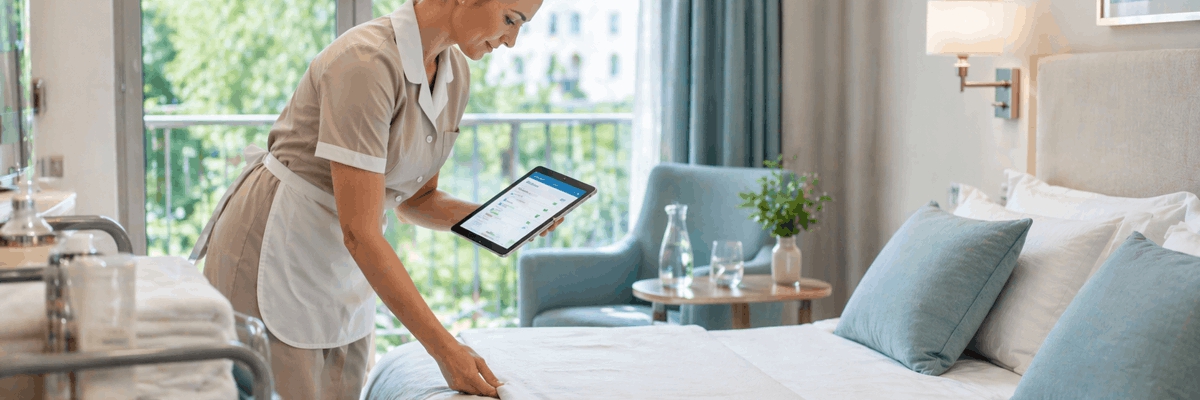
The role of room cleaning in a sanatorium and the need for standardisation
Room cleaning in a sanatorium is part of the therapeutic environment, not merely a service function. European wellness and medical resorts place strict emphasis on hygiene, consistency, and guest comfort, particularly due to longer stays and health-related programmes. Cleanliness standards directly influence guest satisfaction, safety, and return rates.
To achieve stable quality, operations must rely on clearly defined procedures, transparent task allocation, and continuous monitoring. In practice, this is best supported by Management of a sanatorium on platform 1C: Enterprise 8, which enables real-time control over room status, staff workload, and execution quality.
Standards for room cleaning in a sanatorium
A structured approach to room cleaning is based on clearly differentiated types of service, each aligned with operational needs and hygiene requirements typical for European sanatoria.
The core types of cleaning include:
- daily maintenance cleaning focused on preserving comfort and hygiene during the stay
- cleaning after check-out with full preparation for the next guest
- periodic deep cleaning covering less accessible areas and extended sanitation
Each category is governed by defined procedures, time standards, and measurable quality criteria.
Room cleaning at check-in
Preparing a room for a new guest is a critical stage that shapes the first impression and sets expectations for the entire stay. In European practice, this stage is tightly standardised and often audited.
Key tasks include:
- full cleaning and sanitation of all surfaces, furniture, and bathroom areas
- replacement of all linen and guest amenities
- inspection of equipment, lighting, and ventilation systems
- elimination of odours and verification of overall room readiness
Final inspection plays a decisive role. The use of structured checklists and digital confirmation significantly reduces the risk of inconsistencies and service failures.
Room cleaning during guest stay
During the stay, cleaning must balance operational efficiency with guest privacy and comfort. In sanatoria, this process requires additional flexibility due to treatment schedules, wellness routines, and extended occupancy periods.
Operational priorities include:
- aligning cleaning schedules with guest routines and medical programmes
- performing tasks discreetly, whether the guest is present or absent
- maintaining a consistent supply of consumables and linen
- ensuring a calm environment, respecting rest and recovery conditions
Effective coordination between housekeeping and other departments is essential to maintain service continuity.
Room cleaning at check-out
Cleaning after check-out is the most resource-intensive stage, as it prepares the room for the next occupancy cycle. In European resorts with high occupancy rates, turnaround efficiency is a key performance factor.
The process typically includes:
- deep cleaning and sanitation of all surfaces and equipment
- inspection for damages and documentation of room condition
- handling of forgotten items in line with internal procedures
- coordination with maintenance teams for immediate issue resolution
Maintaining quality while ensuring fast room readiness is critical for operational performance.
Quality control in room cleaning
Consistent quality requires a structured control system embedded into daily operations. European sanatoria increasingly rely on measurable standards rather than subjective evaluation.
Effective quality control practices include:
- checklist-based verification for each cleaning type
- random inspections by supervisors
- digital recording of completed tasks and deviations
- systematic review of guest feedback and complaints
Such an approach ensures accountability and continuous improvement of service standards.
Digital management of housekeeping operations
Modern sanatoria are transitioning from manual coordination to integrated digital systems. This shift allows for better transparency, improved efficiency, and data-driven decision-making.
Key capabilities of digital housekeeping management include:
- real-time tracking of room statuses and cleaning progress
- automated task allocation based on workload and priorities
- monitoring of execution time and staff productivity
- generation of operational reports and performance analytics
These tools significantly reduce operational friction and enhance service reliability.
Coordination with other departments
Housekeeping efficiency depends on close coordination with front office, medical staff, and maintenance teams. In a sanatorium environment, this interaction is particularly important due to the integration of accommodation and treatment services.
Seamless communication ensures accurate timing of cleaning activities, rapid response to technical issues, and alignment with guest schedules.
Conclusion
Room cleaning in a sanatorium is a structured and operationally critical process that directly impacts service quality and guest experience. Clear differentiation between cleaning at check-in, during stay, and at check-out enables consistent standards and efficient resource utilisation.
In European practice, the integration of digital tools has become a key success factor. The implementation of SandsSoft software for housekeeping allows organisations to standardise processes, improve transparency, and maintain high-quality service levels while optimising operational costs.