
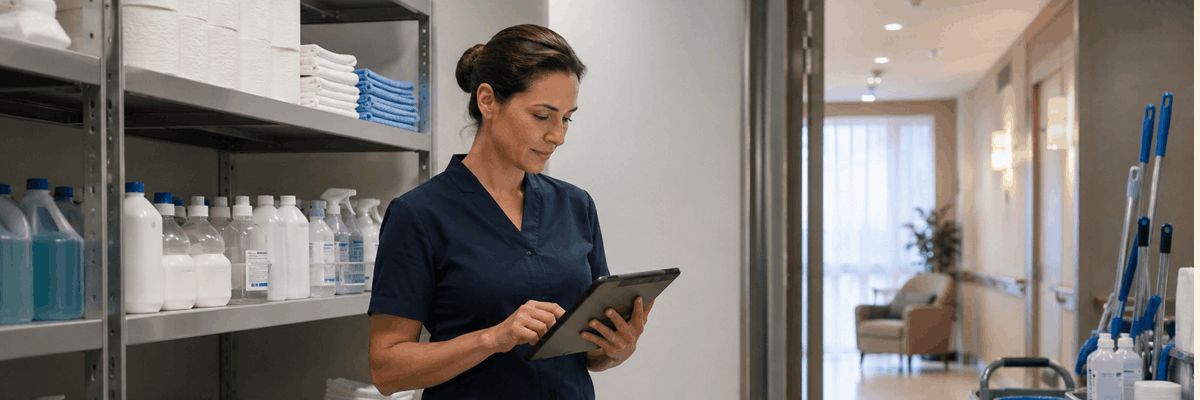
Detergent Consumption Standards in a Sanatorium: Housekeeping Supplies, Inventory Control and Inventory Accounting
A sanatorium operates across several service zones at the same time: guest rooms, treatment rooms, corridors, public areas, dining facilities, laundry, wellness areas, storage rooms and administrative premises. Each zone requires regular cleaning, hygiene control, stock availability and accountable use of detergents, disinfectants, cleaning tools and housekeeping inventory.
Without clear detergent consumption standards, the housekeeping department often works with approximate requests, manual stock checks and delayed procurement decisions. This creates a risk of overspending, stock shortages, excessive warehouse reserves and weak control over issued materials.
For a sanatorium that needs predictable housekeeping operations, it is practical to use the Management of a sanatorium using the SandSoft platform. It helps organise detergent accounting, control stock levels, manage housekeeping inventory, record internal movements and support procurement decisions based on actual demand and approved consumption standards.
Why Detergent Consumption Standards Matter in a Sanatorium
Detergent consumption standards define how much cleaning material should be used for a specific type of work, area, room category or department. In a sanatorium, these standards are not only a financial control tool. They are part of operational discipline, because cleaning processes must be regular, traceable and properly supplied.
European sanatoriums and wellness facilities often work with different categories of premises: accommodation areas, medical treatment rooms, rehabilitation zones, spa areas, restaurants, kitchens and common spaces. Each category has its own cleaning frequency, hygiene requirements and material usage pattern. A single general estimate for the whole facility is usually not enough.
Detergent consumption standards help the facility compare planned and actual usage. If consumption is higher than expected, management can identify whether the reason is increased occupancy, additional cleaning cycles, incorrect dosage, poor material quality, unrecorded issue of supplies or weak control at department level.
What Detergent Accounting Should Include
Detergent accounting should cover the full movement of cleaning materials from purchase to final use. It is not sufficient to register only supplier deliveries and monthly write-offs. A sanatorium needs to understand where materials are stored, who received them, which department used them and whether the usage corresponds to approved standards.
A reliable accounting process should include:
- receipt of detergents, cleaning agents, disinfectants and related consumables from suppliers;
- storage at the central warehouse, housekeeping store or departmental storage points;
- issue of materials to housekeepers, cleaners, laundry, kitchen, spa, treatment rooms and other departments;
- internal transfers between warehouses, buildings or service areas;
- write-off according to approved detergent consumption standards;
- monitoring of expiry dates, minimum stock levels and slow-moving items.
This approach gives the housekeeping manager and finance department a clear view of both stock and consumption. It also helps prevent a situation where materials are physically used, but not properly reflected in accounting records.
How to Set Detergent Consumption Standards
Detergent consumption standards should be based on actual operating conditions. For a sanatorium, the main factors include room occupancy, floor area, number of treatment rooms, cleaning frequency, type of surfaces, hygiene requirements, seasonality and the service level expected by guests.
For example, a guest room, treatment room, dining area and swimming pool changing room require different cleaning procedures and different materials. The same detergent may also have different consumption rates depending on concentration, dosage method and surface type.
In practice, standards can be set by area, room type, bed-day, procedure room, cleaning cycle or department. The model should be detailed enough to support control, but not so complex that employees cannot use it in daily work. A practical starting point is to define standards for the most frequently used and highest-cost materials, then expand the model as the housekeeping process becomes more structured.
Stock Control of Detergents and Cleaning Supplies
Stock control of detergents is essential for uninterrupted housekeeping operations. If the sanatorium discovers a shortage only when a department requests materials, the housekeeping service has to act reactively. This can lead to urgent purchases, replacement of materials with unsuitable alternatives or disruption of planned cleaning work.
Proper stock control should cover not only the central warehouse, but also floor storage rooms, housekeeping carts, laundry, kitchen, treatment areas and other departments that keep their own reserves. This is especially important for multi-building sanatoriums and facilities with seasonal occupancy peaks.
Minimum stock levels should be set for key items. When the balance approaches the minimum threshold, the system should indicate the need for replenishment. This allows procurement to be planned in advance and reduces the risk of both shortages and excessive stock.
Accounting for Housekeeping Inventory
Housekeeping inventory is different from detergents and consumables. Detergents are used and written off, while inventory items remain in service for a longer period. They may be assigned to employees, moved between departments, repaired, replaced or written off due to wear.
Housekeeping inventory may include cleaning carts, vacuum cleaners, mops, buckets, brushes, ladders, dispensers, waste containers, textile carts, storage boxes and other equipment used by the housekeeping department. In a sanatorium, some of these items may be used in guest areas, while others are assigned to treatment facilities, laundry, kitchens or technical rooms.
The purpose of housekeeping inventory accounting is to know where each item is located, who is responsible for it, what condition it is in and when replacement is required. This reduces losses, supports internal accountability and helps plan purchases before equipment failure affects daily operations.
Common Problems in Manual Housekeeping Control
Many facilities still manage cleaning supplies and inventory through spreadsheets, paper forms or separate warehouse records. This may be acceptable for very small operations, but it becomes unreliable when a sanatorium has several buildings, departments, responsible employees and frequent internal movements.
Typical problems include:
- no accurate stock visibility by warehouse, building or department;
- detergent write-off without reference to consumption standards;
- procurement requests based on assumptions rather than calculated demand;
- difficulty identifying who received materials or inventory;
- duplicated purchases caused by lack of stock transparency;
- time-consuming stocktaking;
- limited ability to compare actual consumption with planned usage.
These problems make it difficult to manage housekeeping costs. They also increase dependency on individual employees who know the process informally, but do not maintain a reliable data structure for management decisions.
Procurement Planning for the Housekeeping Department
Procurement for housekeeping should be based on calculated demand. A purchase request should consider detergent consumption standards, current stock balances, actual usage, expected occupancy, delivery times and minimum reserve levels.
This approach helps avoid two opposite risks. The first risk is shortage, when the housekeeping department does not have enough supplies for scheduled cleaning, guest turnover or treatment area maintenance. The second risk is overstocking, when the facility purchases more materials than needed, increases storage costs and creates a risk of expired or obsolete stock.
A structured procurement process connects operational usage with financial planning. The housekeeping manager can justify requests with data, while the finance or purchasing department can see why specific quantities are required. This makes procurement more transparent and reduces unnecessary spending.
How Automation Improves Housekeeping Management
Automation helps connect detergent accounting, housekeeping inventory, stock control and procurement into one management process. Instead of separate files and manual reconciliations, the sanatorium receives a structured view of materials, responsible employees, warehouses, departments and consumption history.
A software solution can support daily operations in several areas:
- maintaining directories of detergents, disinfectants, consumables and housekeeping inventory;
- recording receipts, issues, transfers and write-offs;
- controlling stock balances by warehouse, department and responsible person;
- applying detergent consumption standards to regular write-offs;
- monitoring minimum stock levels and replenishment needs;
- assigning inventory items to locations or employees;
- preparing stocktaking and inventory reports;
- analysing actual consumption against approved standards.
For management, this creates a reliable basis for decisions. The facility can see which items are consumed most often, where deviations occur, which departments need additional control and when procurement should be initiated.
Reports Needed for Housekeeping Control
Housekeeping control requires more than a general warehouse balance. The sanatorium needs reports that show movement, usage, responsibility and demand.
Useful reports include stock balances by warehouse and department, material movement for a selected period, issue of supplies to responsible employees, actual consumption compared with standards, items below minimum stock level, housekeeping inventory by location, inventory write-off and replacement history, and procurement demand based on stock and expected usage.
These reports allow the housekeeping manager to move from reactive control to planned management. Instead of checking supplies only when a problem appears, the facility can regularly monitor risk areas and correct deviations before they affect operations.
Implementation Approach
The implementation of detergent consumption standards should begin with structured data. The sanatorium should define the main categories of materials, storage locations, departments and responsible employees. It should also separate consumables from long-term housekeeping inventory, because these groups have different accounting rules.
The next step is to set standards for the most important materials and service areas. It is not necessary to describe every possible cleaning scenario at the beginning. A practical approach is to start with the highest-volume areas: guest rooms, treatment rooms, dining facilities, laundry, corridors and common spaces.
After the standards are introduced, the facility should compare planned and actual consumption regularly. Standards must remain practical. If occupancy changes, new cleaning requirements appear or the facility changes suppliers and product concentration, the standards should be reviewed and adjusted.
Conclusion
Detergent consumption standards help a sanatorium manage housekeeping costs, maintain stable hygiene processes, control stock levels and plan procurement with greater accuracy. They also create a clear basis for comparing planned and actual usage across departments, buildings and service areas.
However, standards alone are not enough. The sanatorium also needs reliable detergent accounting, stock control, housekeeping inventory management and transparent procurement planning. When these processes are connected, the housekeeping department becomes easier to manage and less dependent on manual checks.
For this purpose, a software solution for housekeeping by SandSoft can be used to organise detergent consumption standards, monitor stock balances, account for housekeeping inventory and support daily operational control in a sanatorium.